
Blog
How to Reduce Community Churn and Keep Members Coming Back
How to reduce community churn: measure it, understand why members leave, and apply 10 retention strategies from content to onboarding.
Building communityYou can have the best content in the world and still fail if members leave faster than new ones arrive. Churn, the rate at which members drop out, is the quiet brake on every community and every membership business. The good news: to reduce community churn is not a gamble but the result of a few deliberate moves you can steer on purpose.
In this guide you will learn what churn is and how to measure it, why members leave, and ten actionable strategies to keep more members subscribed for the long term.
The short answer: measure monthly, separate the cancellations people chose from the ones a failed card caused, and fix the failed cards first because that costs setup rather than strategy. After that it comes down to whether members arrive properly in week one and whether something happens every week.
Measuring community churn before you can reduce it
Churn is the share of members who leave in a given period. For a paid community that is the cancellation rate; for a free one it is the number who go inactive and never return. A monthly churn rate of five percent means you lose five of every hundred members each month, and over a year that compounds dramatically because the losses hit an ever smaller base.
This is exactly why it pays to reduce community churn. Every point you shave off means more stable revenue, more active members, and less pressure to constantly win new ones. Keeping existing members is almost always cheaper and easier than acquiring new ones. Lowering churn means building on solid ground instead of a leaky bucket.
Measure your churn regularly, ideally monthly: how many members did you start with, how many left? Only when you know the number and track its trend can you judge whether your efforts are working.
What one point of churn is worth
Put a number on it before choosing a tactic. Take 300 members paying €39 a month, which is €11,700 in monthly recurring revenue. At 8 percent monthly churn you lose 24 members a month, or €936 in recurring revenue every month. At 7 percent it is 21 members and €819. One point is worth €117 a month, and it repeats: over a year the gap compounds into more than a thousand euros of revenue that never had to be won again, plus the marketing cost you did not have to spend replacing those people.
| Monthly churn | Members lost per month at 300 | Recurring revenue lost per month | Ceiling with 20 new members a month |
|---|---|---|---|
| 3 percent | 9 | €351 | 667 members |
| 5 percent | 15 | €585 | 400 members |
| 8 percent | 24 | €936 | 250 members |
| 10 percent | 30 | €1,170 | 200 members |
Straight arithmetic at a steady rate, not a forecast. The last column is the part most people have never calculated: a community only grows until new members and cancellations balance out, which is new members divided by churn rate. The wider revenue picture is in recurring revenue for course creators.
Why members leave: the top reasons
Members rarely quit because the content is bad. They quit because somewhere along the way they lose value, connection, or momentum. The most common reasons are:
- No ongoing value: When nothing new happens for weeks, members wonder what they are paying for.
- No connection: An anonymous membership is easy to cancel; one where you know people is not.
- No visible progress: When members feel they are standing still, they drift away.
- A rough start: Most cancellations trace back to a weak first week, when new members never really arrived.
It also helps to reframe the number. A high churn rate is not a verdict on your members; it is feedback on how your community is built. And the way it is built is something you can change. Each strategy below targets one of these reasons.
It helps to separate voluntary from involuntary churn. Voluntary churn is when a member consciously decides to leave, usually because the value is not there. Involuntary churn is technical, such as an expired card. Both need different fixes, and the involuntary kind in particular can often be cut sharply with very little effort.
| Type of churn | What causes it | How you spot it | What to do first |
|---|---|---|---|
| Involuntary | expired card, declined payment | failed invoices in your billing tool | automatic retries and a card-update email |
| Early and voluntary | never really arrived | cancellations inside the first 30 days | onboarding in the first week |
| Late and voluntary | goal reached, or momentum gone | long-tenured members leaving quietly | a next step, or a pause instead of a cancel |
| Silent | weeks of inactivity, then gone | last-activity dates in the member list | a re-engagement message after seven quiet days |
Four causes, four different responses. Treating them all as one problem is why churn work so often produces nothing.
The cancellations nobody chose
Start with the involuntary kind, because it is the cheapest to fix. Stripe retries failed payments automatically and recommends its Smart Retries schedule, though you can define your own (Stripe on automated retries). Pair the retries with an email asking the member to update their card and a short grace period before access ends. Nothing about your content has to change, and the members you keep were never trying to leave. The full sequence is in Stripe for a membership site.
Strategy 1: Regular high-value content
The most common cancellation trigger is the feeling of getting nothing anymore. When a community goes quiet for weeks, every member eventually asks what they are still doing there. Regular, valuable content answers that question continuously.
Reliability matters more than volume. A fixed rhythm, such as one new post or event per week, creates expectation and habit. Quality beats quantity: one genuinely helpful piece a week binds more than daily noise without substance. Plan content a few weeks ahead so you never have to improvise under pressure.
Strategy 2: Strong personal connections
Members cancel far less often when they feel seen and connected. Personal connection is one of the strongest levers against churn, because an anonymous membership is disposable while one full of real relationships is not.
Welcome new members by name, respond to their posts, and create moments where members get to know each other. A single genuine connection in the first weeks dramatically raises the odds that someone stays. Small groups help too: in a huge anonymous community the individual disappears, while in a smaller cohort real relationships form faster.
Visible appreciation works too. Highlight individual members' contributions, thank people publicly for helping, and give active members a stage. Someone who feels like a valued part of the group does not even consider leaving, because the membership has become part of their identity.
Strategy 3: Visible progress and results
Members stay when they feel they are moving forward. When progress blurs, the sense of standing still creeps in, and that is when churn rises. So make progress visible.
Progress bars on courses, badges for milestones, and celebrating members' wins make development tangible. Remind members how far they have come and help them recognize their own results. A quick early win matters most: someone who achieves a concrete result in the first days links the membership to progress right away.
The combination is what counts: a visible bar shows how far there is to go, a badge marks what is achieved, and a small congratulation makes the moment feel special. Together they speak to the part of us that wants to finish what we start, and that desire keeps members coming back.
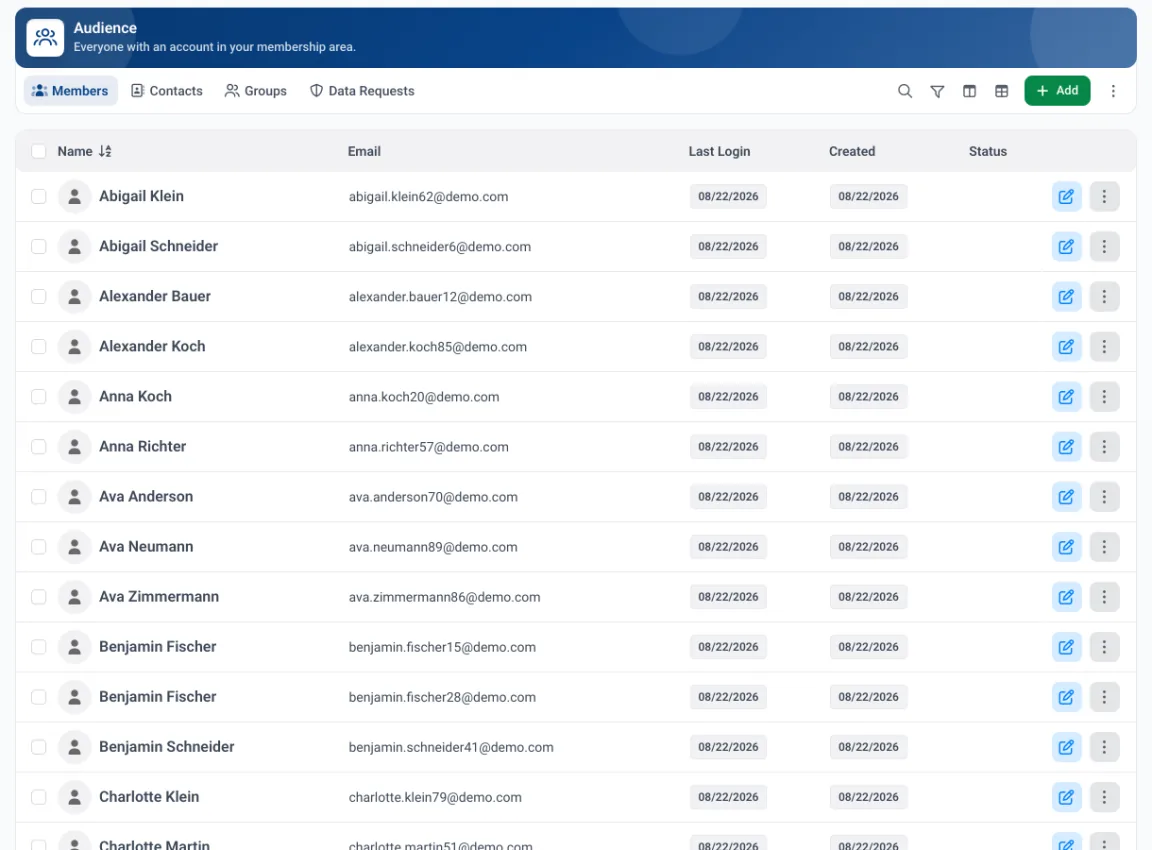
Inactivity shows up weeks before a cancellation does. Getting new members to arrive in the first place is covered in member onboarding best practices.
Strategy 4: Exit surveys and feedback loops
No one knows why members leave better than the members themselves. A short question at cancellation, asking why someone is leaving, gives you the most valuable data of all, because it reveals the real reasons instead of your guesses.
Review these answers regularly and look for patterns. If certain reasons cluster, such as lack of time, missing value, or overwhelm, you have a clear place to act. Feedback from active members is just as valuable: ask regularly what they are missing and act visibly on it. Members who see that their voice counts are more likely to stay.
What matters most is that feedback is visibly acted on. Pick a concrete request, implement it, and say openly that it came from the community. Sometimes a targeted save offer helps as well: someone about to cancel is offered a pause instead, or a quick conversation. Many stay when they feel taken seriously.
Strategies 5 to 10
Six more levers that reliably work:
- Strong onboarding: Most cancellations happen early. A good first few days is the single most effective way to cut churn.
- Win back the inactive: Reach out to members who have not been active in a while before they drop off entirely. A friendly message at the right time saves many.
- Build habits: Recurring rituals and events anchor the community in members' routines.
- Set clear expectations: Members who know what they are getting from the start are disappointed and cancel less often.
- Catch payment failures: For paid communities, automatic payment retries and reminders prevent involuntary cancellations from expired cards.
- Offer annual plans: Members who commit for a year stay far longer on average than monthly subscribers.
If you had to pick a single lever, it would be onboarding. Because most churn happens in the first days, any improvement at the start has an outsized effect on overall retention. A member who lands well is half the battle against attrition already won.
You do not have to apply all ten at once. Start with the biggest levers, usually onboarding and regular content, measure the effect on your churn, and build from there.
Make cancelling easy, and mean it
Burying the cancel button is tempting and counterproductive, and in some markets it is also regulated. In the United States the FTC's Negative Option Rule targets recurring charges consumers did not intend to order and cancellation made harder than signing up (FTC Negative Option Rule), and Germany requires a clearly labelled cancellation button on the website for contracts concluded there. A pause option is the honest version of the same instinct: it keeps members who need a break and loses none of the ones who would have left anyway.
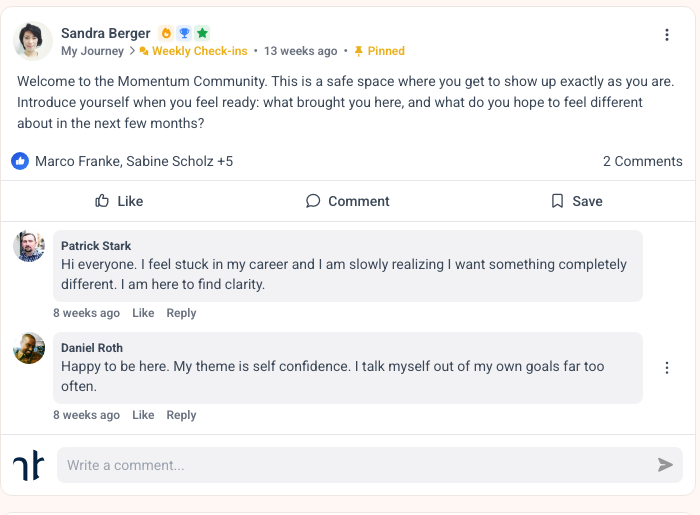
A member who gets an answer rarely cancels. The space that makes that happen is covered in how to build an online community, and the trade-offs of running it on a chat tool in community platform vs Discord.
Track and reduce churn with memberarea.io analytics
To reduce community churn, you first have to see it. On memberarea.io you can tell in the analytics who is active and who is drifting away, and many of these strategies are built in: onboarding automations, regular content and events, gamification for visible progress, reminders for inactive members, and reliable subscription management that catches payment problems.
Because community, courses, payments, and automations live together, these levers reinforce each other instead of being scattered across separate tools. Learn more on the community page and the gamification page, and see plans on the pricing page.
Track and reduce churn with memberarea.io analytics and turn attrition into retention. Start free and keep more members with tools that all live in one place.
Frequently asked questions
What is a good churn rate? It depends on the model. For paid membership communities, a monthly churn rate in the low single digits is considered good. More important than an absolute number is whether your churn trends down over time.
When does most churn happen? Early. The first days and weeks count disproportionately, which is why strong onboarding is the single most effective lever against attrition.
Can I eliminate churn completely? No, some churn is normal and healthy. The goal is not zero but a rate where more members consistently stay than leave.
Is it really worth the effort to lower churn? Yes, usually more than chasing new members. A retained member costs nothing extra yet keeps paying, refers others, and keeps the community alive. Even a few points less churn change your business noticeably over a year.
Conclusion
To reduce community churn means turning several small dials at once: reliable content, personal connection, visible progress, honest feedback, and a strong start. No single move is dramatic, but applied together and consistently they lower attrition noticeably and build a stable foundation.
The first step is measuring. Start free on memberarea.io and find out where your members drop off so you can act exactly there.



Ready to build your membership?
Try it free for 14 days. No credit card, no setup fees. Launch in minutes.
No credit card required · Cancel anytime