
Blog
How to Build an Engaged Online Community from Scratch
How to build an online community from scratch: choose a niche, pick a platform, win your first 50 members, build engagement, and monetize.
Building communityAn online community is one of the most valuable things you can build around your knowledge, your product, or your brand. It keeps people close for the long term, creates a bond no newsletter can match, and over time becomes a place where members help one another rather than just listening to you. Learning how to build an online community is, in effect, learning how to create a business that does not depend on borrowed reach from someone else's platform.
This guide walks you step by step from zero to a thriving community: niche, platform, your first members, culture, engagement, and finally monetization. By the end you will have a clear plan you can act on immediately.
Why learning how to build an online community pays off
An online community is a place where people with a shared interest exchange ideas, learn from each other, and grow together. Unlike a social media profile, this place belongs to you, and unlike an email list, the communication runs both ways.
The benefits are concrete:
- Retention: Members who connect and converse stay far longer than passive course buyers.
- Compounding value: The more active members you have, the more valuable the community becomes for each one. This network effect is hard to copy.
- Independence: You build on ground you own, not on the reach of someone else's algorithm.
- Predictable revenue: A community can be monetized as a membership, which means recurring income.
So when you learn how to build an online community, you are not just creating a group. You are creating an asset that grows stronger with every member who joins.
There is also a deeper shift at play. A community turns a transactional relationship into a belonging one. A customer who merely bought a course can leave without a second thought. A member who has friends, status, and a place in your community has far more reasons to stay, and that emotional connection is the real engine behind retention and word of mouth.
Choosing your niche and positioning
The most common reason communities fail is a niche that is too broad. "A community for entrepreneurs" is too vague to create belonging. "A community for solo coaches selling their first online course" makes every member feel instantly in the right place.
Before you start, answer three questions: Who exactly is this community for? What shared goal or problem connects these people? And why is your community the best place for it? The sharper your answers, the easier it is to attract the right members and the livelier the exchange, because everyone speaks the same language.
A clear position also makes marketing easier. A narrow niche spreads by word of mouth in exactly the circles where your ideal members already gather.
A simple test for your niche: can you describe in one sentence who it is for and what they get? If you can, your positioning is clear. If it takes several sentences or turns vague, the niche is still too wide. It is better to be indispensable to a small group than forgettable to a large one.
Picking the right platform
Free group or platform you own
Where your community lives shapes everything: how professional it looks, how much control you have, and whether you can monetize it. Free social networks like a Facebook group are quick to start but carry three downsides: you do not own the data, the algorithm decides visibility, and ads and distraction are everywhere.
A dedicated community platform solves all three. You get an ad-free space under your brand, full control over members and content, and the ability to integrate courses, events, and payments directly. When choosing, look for native features like a feed, discussions, direct messaging, and moderation tools; for GDPR compliance with EU hosting if you serve European audiences; and for the ability to make the platform truly your own. See what an integrated community looks like on the community page.
| Option | Entry plan per month | Fee per sale | What you give up |
|---|---|---|---|
| memberarea.io | €39 | none | a smaller template ecosystem than US platforms |
| Circle | $89 billed annually | 2% on Professional | course depth |
| Skool Hobby | $9 | 10% + $0.30 | course structure, email, one community per plan |
| Facebook group | free | no selling | the data, the reach and the attention of your members |
Prices checked on 6 September 2026. The percentage matters more than the monthly fee once you charge for access: 10 percent of €2,000 a month is €200, every month.
How the platform connects to the rest
One underrated point is how the platform connects to the rest of your offer. When community, courses, and member management live in one place, every member sees everything in a single login, access is granted automatically after purchase, and you avoid stitching several tools together. That simplicity pays off with every new member. Our overview of membership site software compares the wider field at three member counts.
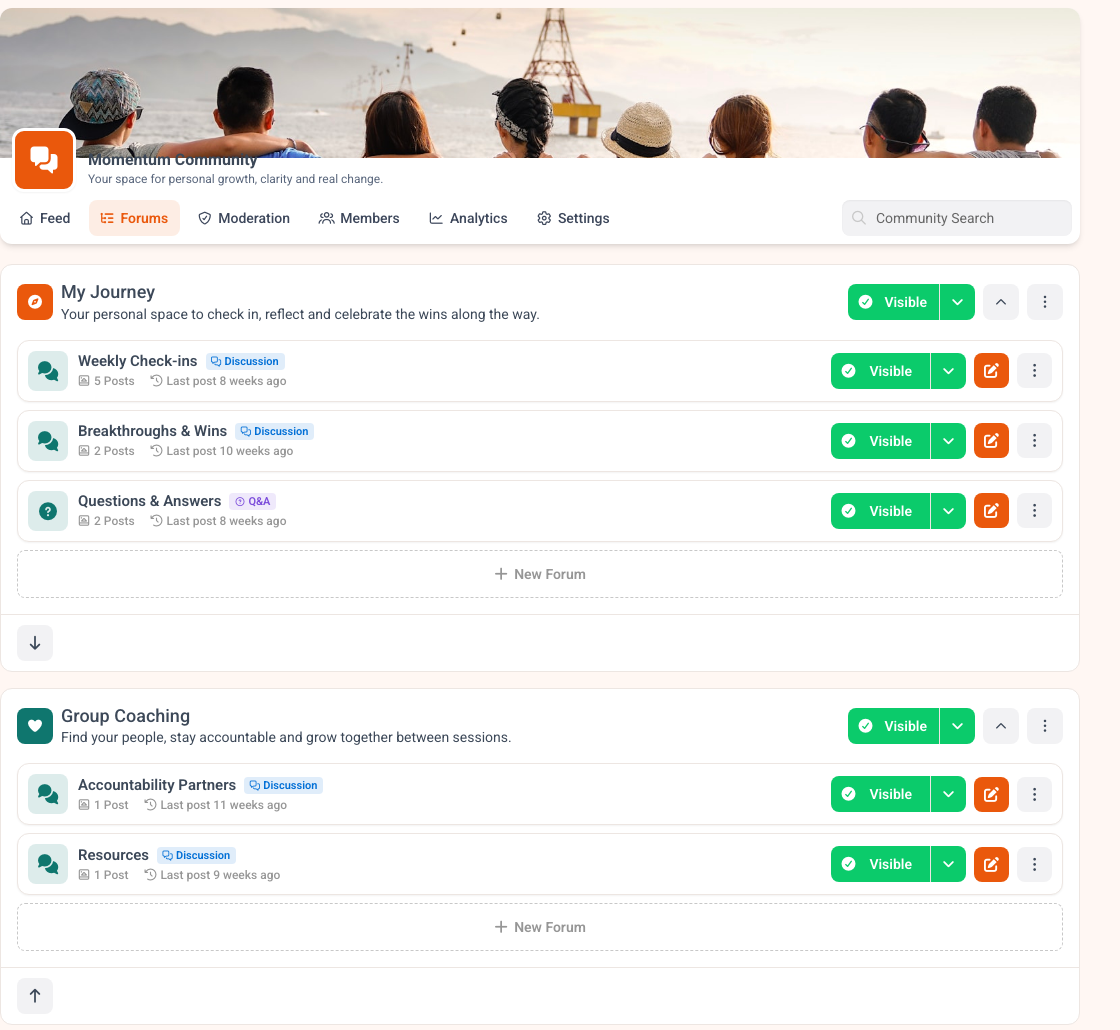
Spaces per topic keep a growing community navigable instead of turning it into one endless feed.
Getting your first 50 members
Why the first fifty decide the tone
The first members are the hardest, because an empty community attracts no one. The trick is not to aim for volume but for the right first fifty, the ones who set the tone.
Proven ways to start:
- Invite personally. Reach out directly to people in your network who are a perfect fit. A personal invitation beats any public announcement.
- Use existing channels. Your email list, social media, and past customers are your warmest audience. Invite them first.
- Give a clear reason to join. A concrete promise, a launch event, or exclusive content provides the decisive nudge.
- Be the engine at first. Ask questions, welcome everyone personally, and start conversations until members take over.
Do not aim for a thousand members on day one. Fifty active, well-matched members are worth more than a thousand silent ones, because active members create the energy that later attracts new ones on its own.
Never open an empty room
Make sure new members do not arrive to an empty room. Before you open the doors, seed a few discussions, a welcome message, and some first useful content so the community feels alive from day one. A space where something is already happening invites people to join in far more than a blank start page. What those first days should look like is in member onboarding best practices.
And once people are in, keeping them is its own discipline: reducing community churn covers the reasons members leave.
Building rituals and engagement habits
Activity comes from reliability. When members know that something happens regularly, they keep coming back. Rituals give the community a rhythm and free you from constantly inventing something new.
- Daily: Answer new posts, welcome new members, and be present yourself. Even a few minutes keep the momentum.
- Weekly: Recurring formats like a Monday check-in, a question of the week, or a Friday wins thread create reliable anchor points.
- Monthly: Bigger moments like a live call, a Q-and-A, or a small challenge create highlights members look forward to.
The single most important lever is response: when every post gets a reply, members feel seen and post again. A community where posts go unanswered falls silent fast. Gamification reinforces this further by rewarding participation, as the gamification page shows.
Over time the work shifts. At first you provide most of the prompts; later they increasingly come from members. Encourage that on purpose: ask open questions, invite members to share their experiences, and spotlight great contributions. A community where members answer one another is the goal, because it sustains itself and grows beyond your own capacity.
Monetizing your community
Paid membership is the most direct model
An active community is not only valuable to its members, it is also a sustainable source of income. The most direct model is a paid membership: members pay monthly or yearly for access. This works especially well when the community delivers ongoing value through new content, events, and the exchange itself.
Other models combine well: paid courses inside the community, exclusive premium areas, paid events, or an affiliate program through which members recruit new members. The key is to build value first and monetize second. A community that delivers real help and connection first sells almost by itself later. A platform that unifies community, courses, and payments makes this step possible without extra tools.
What to charge
On pricing, the same rule applies as for courses: anchor on the value to members, not an arbitrary number. A monthly fee that pays for itself through a single valuable connection or answer feels fair. Start with a solid price and adjust it rather than underselling from the start, and offer an annual option that improves both retention and cash flow. The method behind that number is in how to price an online course, and recurring revenue for course creators covers what happens after the first month.
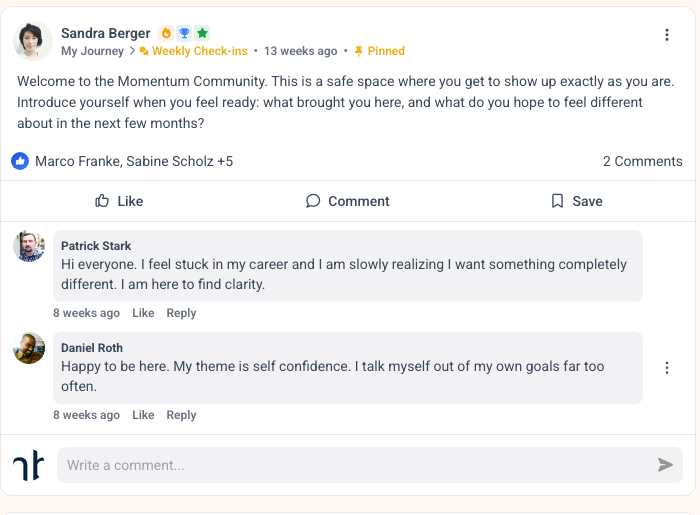
This is what members pay for: a thread where someone answers, not a page of content.
Build your community on memberarea.io and create an ad-free home under your brand, with a feed, discussions, events, gamification, and built-in payments. Start free and bring community, courses, and monetization together in one platform.
Frequently asked questions
How long does it take to build a community? You can win the first active members in weeks, but a truly lively community grows over months. Consistency matters most: a little every week beats a big launch followed by silence.
Free or paid community? Both have merit. A free community grows faster and works as an entry point, while a paid one attracts more committed members and brings revenue immediately. Many combine a free entry with a paid premium tier.
How many members do I need for it to be worth it? Fewer than you think. Even a few dozen active members can sustain a lively community and meaningful revenue, if the niche is clear and the value is high.
Do I need a large audience before I start? No. A small, engaged group is a better foundation than a large, passive following. Start with the people you can reach today and let the community's own energy attract the rest over time.
Conclusion
Knowing how to build an online community is a craft, not luck: choose a sharp niche, a platform you own, win your first members personally, establish a strong culture early, keep engagement high with rituals and events, and monetize only once real value exists.
The best time to start is now, because every community begins with its first member. Start free on memberarea.io and take the first step toward a place that belongs to you and grows more valuable with every member.



Ready to build your membership?
Try it free for 14 days. No credit card, no setup fees. Launch in minutes.
No credit card required · Cancel anytime