
Blog
The Free Course Tripwire: From Free to Paid in 3 Steps
A free course strategy that sells: how a free mini course builds trust and turns prospects into paying customers.
Getting membersGiving something away free sounds at first like the opposite of business. But a well made free mini course is one of the strongest levers for turning strangers into paying customers. It builds trust, shows your competence and delivers a first win that creates appetite for more. A well considered free course strategy does not give away revenue, it prepares it.
In this article you will learn what a tripwire is and how it works, how to design the right free course, when the best moment for your paid offer comes, how to automate the transition from free to paid, and which patterns from practice you can orient yourself on.
The short answer: give away the first completed step entirely, not half of everything. The offer comes exactly when the student has reached their first result, and the whole sequence runs automatically.
Free course strategy and tripwire: what sits behind it
In marketing a tripwire is a low-barrier first offer that makes entering your world as easy as possible. Classically that is a very cheap product, but with knowledge a free mini course often works even better, because it delivers real value immediately without anyone reaching for their wallet.
The idea behind it is simple: the biggest hurdle is not price but missing trust. Someone who has never experienced you rarely buys an expensive programme directly. A free course lowers that hurdle to zero. The prospect experiences your way of explaining, reaches a first small goal and thinks at the end: if the free material is already this good, how good is the paid course?
Exactly there lies the core of every good free course strategy. You do not give away everything but the first, clearly bounded step. The free course solves a concrete part of the problem completely and makes visible that there is a bigger, worthwhile next step your paid offer delivers.
An often overlooked advantage: signing up for the free course already gives you the email address and thus a direct line to the prospect. Even those who do not buy immediately remain reachable and can become customers later through further content and offers. The free course is therefore also one of the best ways to build your email list.
Compared with a pure lead magnet like a PDF, a free course is considerably stronger because it creates contact across several days. Someone who follows you for three or four days builds a real relationship, and exactly that relationship is the basis for the later sale.
Free course, tripwire and lead magnet compared
| Format | What it costs | Contact duration | What it is for |
|---|---|---|---|
| PDF or checklist | free | minutes | winning the address |
| Free course | free | three to five days | trust and a first result |
| Tripwire | a small amount | hours to days | turning prospects into buyers |
| Main offer | the full price | weeks to months | the actual transformation |
The third column explains why a free course works better than a PDF: someone who listens to you across several days decides differently from someone who downloads a file. The difference between free and a small amount, by the way, is not the revenue but the selection: whoever pays one euro is a different contact from whoever pays nothing.
Designing the right free course
The most common mistake is giving too little or too much. Giving too little builds no trust. Giving everything away removes the reason to buy. The art lies in between: a complete, satisfying win in a narrowly defined area.
When building it, watch these points:
- A clear outcome: at the end the student can do something concrete they could not do before.
- Short and focused: few lessons that lead quickly to a win rather than an inflated programme.
- High quality: the free course is your calling card. If it looks cheap, that transfers to your paid offer.
- A natural continuation: the outcome raises a new question your course answers.
On format you have free choice: short videos, texts, a checklist or a mix. More important than the form is that students get into doing quickly. A small task per lesson ensures they do not only consume but actually achieve a result, and exactly that sense of success sells your main course later.
Promise a concrete outcome in the title of the free course, not just a topic. "To your first routine in seven days" pulls harder than "fundamentals of self-organisation". A clear promise ensures exactly the people who will later need your paid offer sign up.
Think backwards from the paid course. What must someone have understood or achieved for your main offer to be the logical next step? Exactly that belongs in the free course. That creates a bridge rather than a dead end. You build the course itself with the course editor, as the courses page shows.
The transition point: when the paid offer comes
Timing decides. If the offer comes too early, the free course feels like a disguised sales funnel and trust collapses. If it comes too late or not at all, you give away value without a return. The best moment is the peak of the first win, when the student just feels it working.
At that moment motivation is highest and the next step most obvious. Present your paid offer then not as a break but as a continuation: you have just laid the foundation, in the course we build the whole house on it. Make the transition concrete and clearly name what the next step brings.
Stay honest and pressure-free. A free course that aims only at the sale from the first minute feels wrong and damages your reputation. When the free part is already valuable on its own, the offer at the end does not feel pushy but like a gift to everyone who wants more.
A frictionless purchase directly afterwards matters. A clear button, a branded checkout, immediate access. Any friction here costs you sales. What such a checkout looks like is on the checkout page.
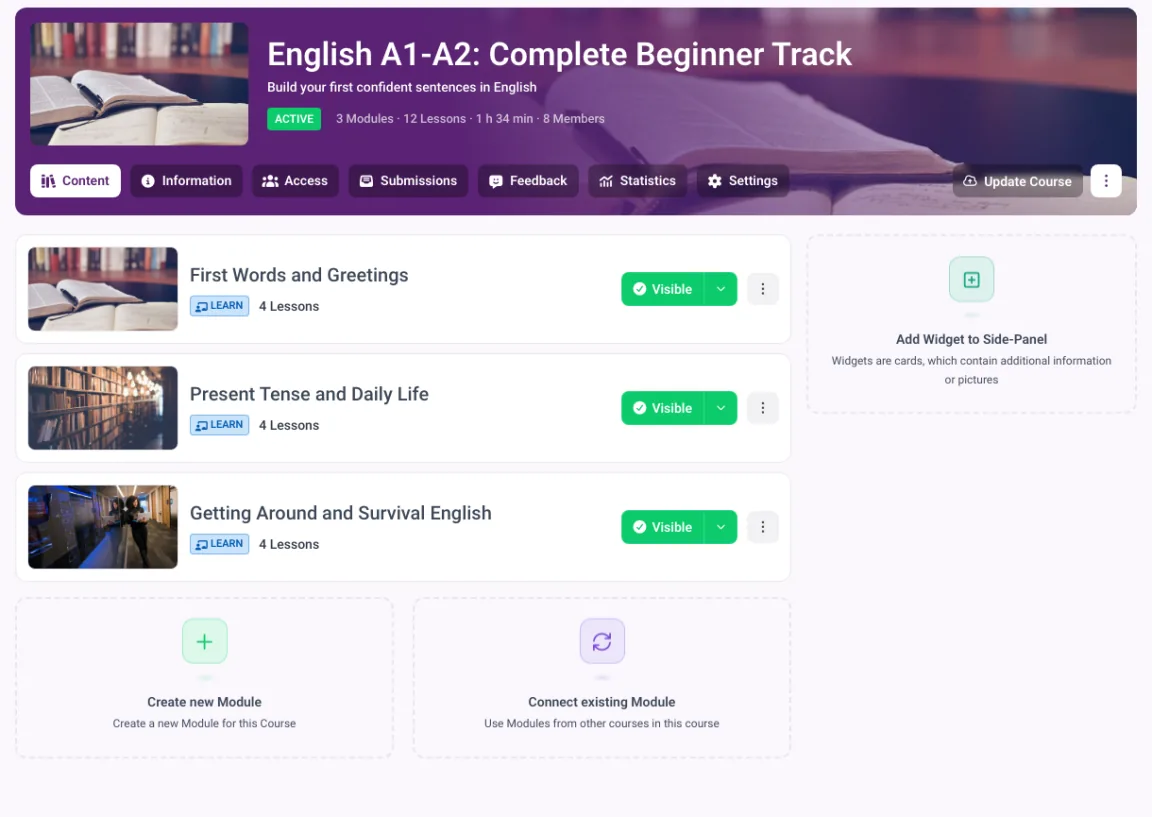
Technically the free course is a course like any other, only shorter. The build is in how to create an online course, the scheduled release in drip content for courses.
Automation: free to paid without manual work
The real advantage of a free course strategy emerges when it runs automatically. Once set up, the tripwire works around the clock: people sign up, go through the free course and receive the right offer at the right time, without you stepping in.
The backbone is an email sequence accompanying the free course. It reminds people of the next lesson, celebrates the first win, presents the offer at the right moment and afterwards answers the most common objections. Whoever buys is removed from the sales sequence and welcomed into the main course.
Keep the key numbers in view: how many complete the free course, how many click on the offer, how many buy? Those points show you exactly where it stalls. Often a small change to a lesson or an email is enough to raise the number of buyers noticeably.
That turns a one-off effort into a permanent channel. You improve the content and the emails from the numbers and let the system do the rest. How such flows are set up is shown on the automations page.
The four numbers that show where it stalls
| Metric | Example | If it is low |
|---|---|---|
| Signups per 100 visitors | 25 | sharpen the promise on the page |
| Completion rate of the free course | 40 percent | shorten it, the course is too long |
| Clicks on the offer | 20 percent of graduates | the transition comes too early or too quietly |
| Purchases | 10 percent of clicks | price, sales page or objections |
Example values, not benchmarks. Worked through: 1,000 visitors give 250 signups, 100 graduates, 20 clicks and 2 purchases. At €497 that is €994 from a course you produced once. That is exactly why improving the weakest of the four rows beats chasing more visitors.
Patterns from practice
Good tripwire courses resemble each other in principle, whatever the niche. Three typical patterns:
The quick start. A free course brings beginners to a first tangible result in a few lessons, such as the first published post or the first system set up. The main course then delivers depth and advanced topics.
The one method. The free course teaches a single, clearly bounded technique completely. That creates curiosity about the whole system in the paid offer.
The assessment. The free course helps people understand and classify their own problem precisely. Once it is clear where the issue lies, the paid course is the obvious solution.
What they share is that the free course satisfies completely and still leads naturally to the next step. Take inspiration from these patterns and adapt them to your topic.
What the word "free" means legally
A point often overlooked with free offers: a free course is a commercial practice too. Acting unfairly includes failing to identify the commercial intent, unless it is directly apparent from the context (§ 5a UWG, German unfair competition law). In practice that means: say on the signup page that you will send emails afterwards and that a paid offer exists. That costs you no signups; on the contrary, it filters out exactly the people who would never have bought anyway.
And for the emails afterwards, § 7 UWG applies: email marketing without explicit consent is only permitted under narrow conditions (§ 7 UWG). So obtain consent cleanly at signup to the free course, with a note on what you will send. More on the form in email marketing for online courses.
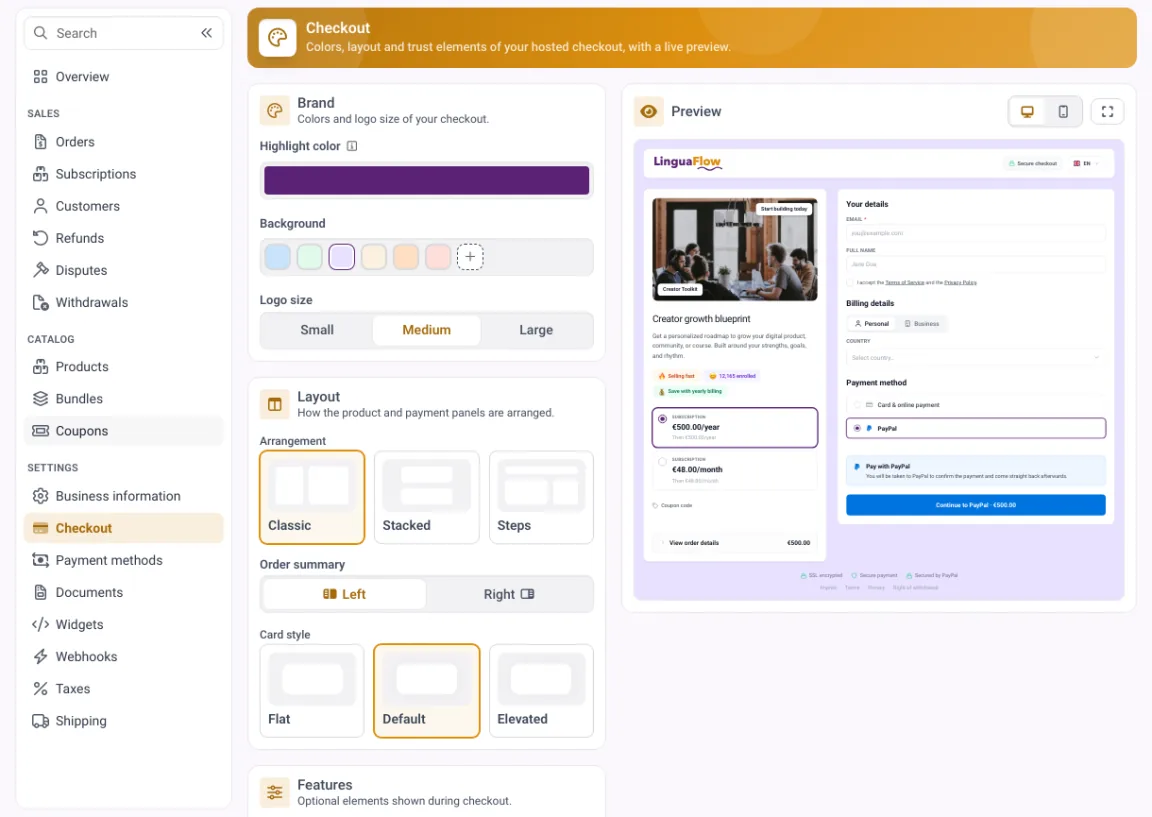
From the last video of the free course to the checkout it should be two clicks. What the page before it looks like is in the sales page for your online course.
Build your tripwire course on memberarea.io
For a free course strategy to work, course, emails, offer and checkout have to interlock. On memberarea.io all of that sits in one place. You build the free course and the paid course in the same environment, connect both with an automatic email sequence and a branded checkout, and see exactly how many students travel the path from free to paid.
Because everything sits together, a free participant becomes a paying member with immediate access seamlessly, without switching tools and without manual tracking. More on course building is on the courses page and the plans on the pricing page.
You do not need to connect half a dozen tools or transfer data by hand. Signup, progress, emails and purchase run in the same system, so nothing is lost and you keep the full overview at any time.
Build your tripwire course on memberarea.io and turn free participants into paying customers. Try memberarea.io free and set up your first free course including the transition to the paid offer.
Once the free course runs, it is the entry to the flow described in sales funnels for coaches.
Frequently asked questions
Am I giving away too much with a free course? No, if it is clearly bounded. You give the first step completely, not the whole system. The part you solve creates appetite for the bigger, paid next step.
How long should a tripwire course be? Short enough to lead quickly to a win, often only a few compact lessons. What decides is not length but the result achieved.
Do I need a big email list for this to pay off? No. Even a few signups a week create a steady stream of buyers when the transition is right. The list grows by itself over time.
Should the free course be time-limited or permanently available? Both work. A permanently available course runs as a steady channel in the background, while a time-limited campaign creates additional urgency. You can also experiment with both.
Conclusion
A free course strategy as a tripwire is one of the most elegant routes from free to paid: you lower the entry barrier to zero, build real trust and lead to the paid offer at exactly the right moment. Design a free course that solves a concrete part of the problem completely, place the offer at the peak of the first win, and let the transition run automatically.
Remember your first tripwire does not have to be perfect. Even the first run shows where students drop out and where they buy, and with every round the path from free to paid gets smoother.
Start with a single, clearly bounded free course and improve it from the numbers. Try memberarea.io free and build your tripwire where the paid course and the checkout also live.



Ready to build your membership?
Try it free for 14 days. No credit card, no setup fees. Launch in minutes.
No credit card required · Cancel anytime