
Blog
Real Estate Coaching: Building an Online Course and Community
Take your real estate coaching online: turn your knowledge into a course, build a community and create a business that scales beyond your hours.
By industryAnyone who has made a name as a real estate coach sits on a valuable asset: field-tested knowledge many people urgently want. Whether it is investment property, letting, financing or the first steps into a portfolio, the questions are complex and the willingness to invest in good answers is high. That is exactly where the digital business model comes in: instead of passing on your knowledge only in one-to-one conversations, you package it once into an online course and make it accessible to many.
This guide shows how to take your real estate coaching online. You will learn which topics suit an online course, how to address beginners and experienced investors differently, how to build a community around your content, and how to price high-value niche courses properly. The goal is a scalable business that no longer hangs on your available time but grows even when you are not coaching.
The short version: a topic with a long shelf life, one audience per course, and a price that matches the weight of the decision. In this niche you do not need reach into the thousands but an offer a few dozen people a year will pay four figures for.
Which real estate topics suit an online course
Not every topic carries a whole course, and not all knowledge transfers well digitally. The best topics for an online course as a real estate coach are those where you can show a clear path from A to B. How do I finance my first apartment? How do I calculate an investment property properly? How do I build a rental portfolio step by step? Such concrete transformations are gold, because your student ends up able to do something they could not do before.
Make sure your topic is specific enough. A course promising to teach everything about real estate looks arbitrary. A course explaining how an employee on a middle income buys their first rental apartment addresses a clear audience and sells better. The more precise the promise, the more easily your course finds the people it was made for.
A good test is whether you already answer the same questions about your topic again and again. Exactly those recurring questions are the raw material for your online course. They show where the real need lies and help you structure the course along your audience's actual problems rather than along what you consider important.
The shelf life of your content
| Topic | Shelf life | Belongs in |
|---|---|---|
| Strategy and portfolio building | years | the fixed course |
| Property valuation and calculation | years | the fixed course |
| Negotiation and the buying process | years | the fixed course |
| Interest rates and financing terms | months | community or an update area |
| Grants and tax details | until the next change | community or an update area |
The third column saves you a re-recording every year. Everything that changes belongs in a channel you can update in ten minutes. How course building works in general is in how to create an online course.
Remember that real estate knowledge can age quickly, for instance around grants, taxes or interest rates. Topics with a long shelf life, meaning strategy, valuation and negotiation, suit a fixed course better. Current, frequently changing content is better delivered continuously through your community or supplementary updates, so your course does not have to be re-recorded every year.
Audience: beginners or experienced investors
Before recording a single lesson you should know who you are making it for. Beginners and experienced investors have completely different needs, and a course trying to serve both at once ends up serving neither properly. Choosing a clear audience is therefore one of the most important decisions of all.
Beginners need security, structure and the feeling of being guided. They are often afraid of making expensive mistakes and value a course that explains every step and names the typical pitfalls. Here you score with clear teaching, checklists and examples that assume nothing. Your promise is: from the first thought to the first property, without getting lost.
Experienced investors, by contrast, look for depth, efficiency and the decisive edge. They do not want to repeat basics but want advanced strategies, tax optimisation, scaling or specific niches. For them it is less about completeness than about the quality of individual insights that genuinely save or make them money. Such courses may be more compact but often justify a considerably higher price.
| Beginners | Experienced investors | |
|---|---|---|
| What they want | security and structure | depth and an edge |
| Biggest fear | an expensive mistake | wasted potential |
| Course scope | complete, step by step | compact but specific |
| What convinces | checklists and examples | numbers and worked cases |
| Price level | medium | high |
Two columns that overlap in no single point. That is exactly why one course for both does not work.
You do not have to commit forever, but you should decide per course. Many successful real estate coaches build a small staircase of offers over time: a beginner course as the entry, a deepening programme on top and finally a high-priced format for serious investors. That way your student grows with you instead of disappearing after the first course, and you raise the value of every customer relationship.
Building a community for real estate investors
An online course conveys knowledge, but a community creates attachment. With real estate in particular, exchange among peers is enormously valuable: students share experiences, discuss specific properties, give tips on regions or financing and motivate each other to keep going. A pure video course can never deliver that dynamic.
For you as a real estate coach a community is also a strong lever against course abandonment. Someone who is part of an active group is more likely to stay on track and actually implement what they learned. And exactly those results are your best selling points, because satisfied students recommend you and become repeat customers for future offers. Through the community you can create exactly that meeting place where your investors exchange ideas and you stay present.
A community meshes well with your course. You can set up exclusive areas for course participants, offer regular Q&A sessions or form groups by experience level and region. That way everyone feels in the right place and the conversations stay relevant. What matters is being present yourself at the start and giving prompts, because a community does not appear on its own but needs your active moderation at first.
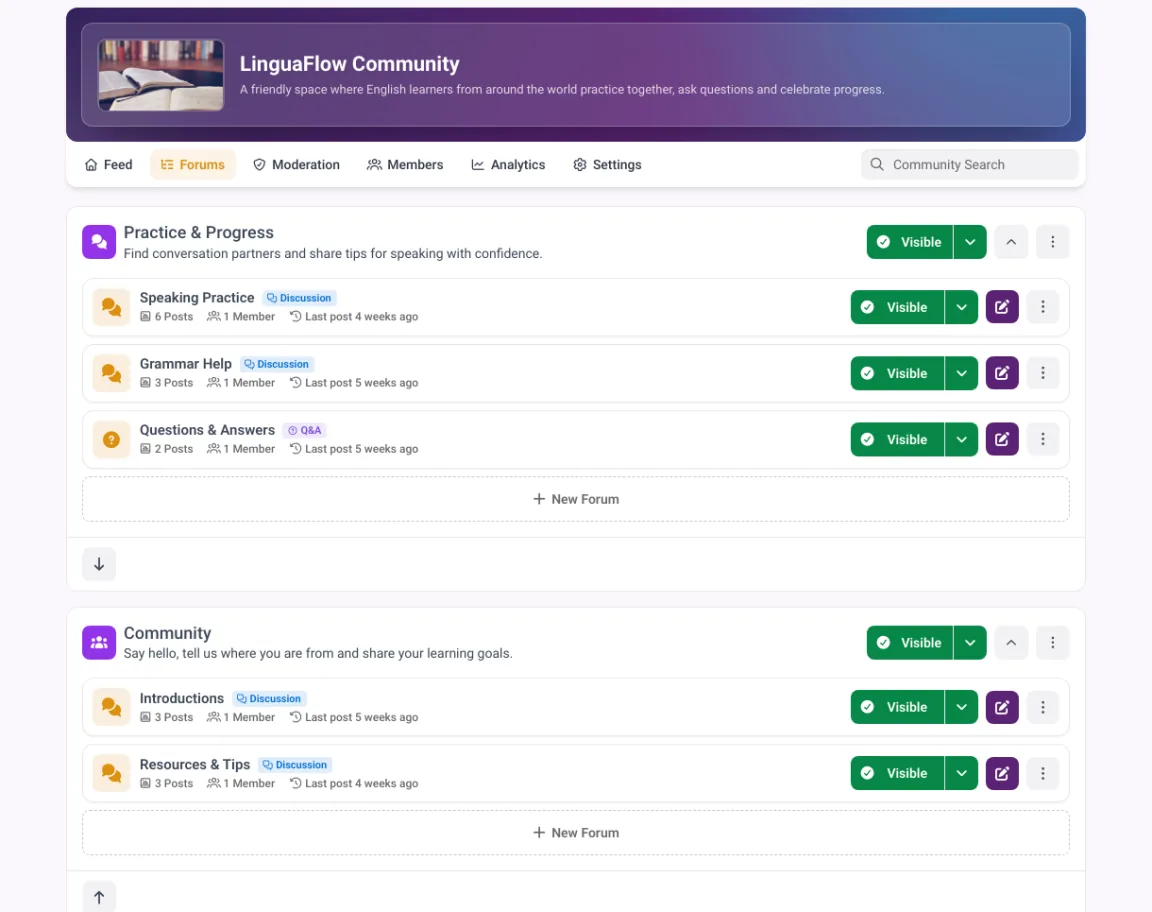
Separate areas by experience level or region keep the conversations relevant. How that becomes an offer of its own is in building a paid community.
Over time that often develops a value of its own. A lively community of real estate investors becomes a reason to stay in itself, independent of any single course. That opens recurring revenue for you, for instance through a monthly membership, and makes your business more stable because it no longer depends on individual course sales alone.
Pricing high-value niche courses
Real estate is a niche where a lot of money is at stake, and your price may reflect that. Someone who learns how to select an investment property properly potentially saves or earns a multiple of what your course costs. Do not give that value away by orienting yourself on cheap mass-market courses. A high-priced, focused course matches the weight of the decisions involved.
What the price means for your sales numbers
| Course price | Sales for €50,000 a year | What that means |
|---|---|---|
| €497 | 101 | two sales a week, you need reach |
| €997 | 51 | one a week, achievable with a small list |
| €1,997 | 26 | two a month, sold through conversations |
| €4,997 | 11 | eleven people a year, but with real support |
Rounded figures, not a promise. In a niche about six-figure purchase decisions, the lower half of the table is often the easier route. How to derive the price is in how to price an online course.
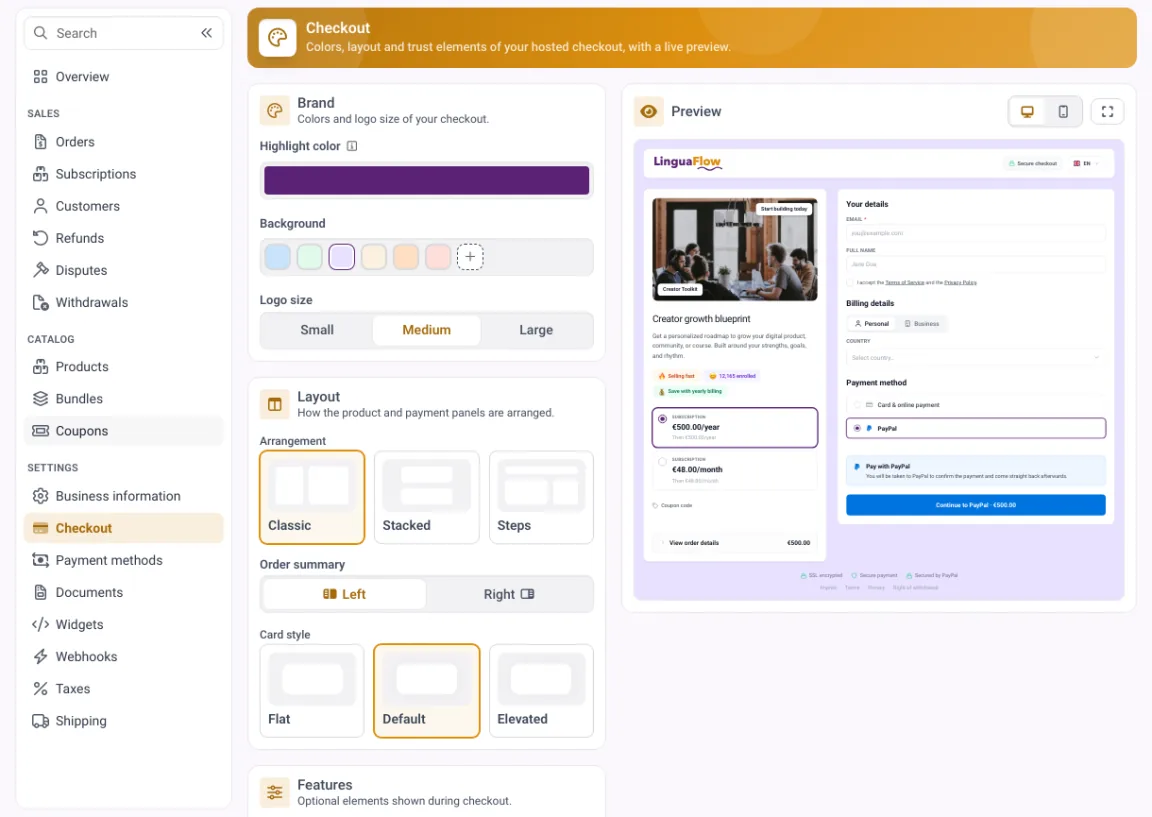
With four-figure courses, instalments are not a discount but the difference between a purchase and an abandoned cart. Which payment methods pay off is in payment processing for coaches.
The key to a higher price is perceived value. The more concrete and credible your promised outcome and the more you back it with real case examples and testimonials, the more a high price justifies itself. Supplementary elements such as personal support, templates, calculation tools or community access raise that value further and lift your course above a mere video collection.
Technically you should stay flexible. Some students prefer to pay once, others prefer instalments, especially at higher amounts. A platform that handles one-off payments, instalments and recurring memberships gives you every option. memberarea.io processes payments natively through Stripe, so you can offer different pricing models cleanly and collect subscriptions for your community reliably. How that works is in the payments area.
How to talk about results
With money topics in particular the line between convincing and misleading is thin, and it is drawn by law. A commercial practice is misleading, among other things, when it contains untrue statements or statements capable of deception about the results to be expected from use (§ 5 UWG, German unfair competition law). A yield figure in your sales copy is therefore not a stylistic device but a statement you will be measured against. The safe and usually more credible route is to show concrete cases and state the assumptions behind them rather than putting a number out there as an expected value.
Do not shy away from testing and adjusting your price over time. Many coaches start too low out of fear that nobody would pay more. Often the opposite is true: a higher price attracts more determined students who actually implement what they learn, and it strengthens the perceived quality of your offer. Start with a fair price, watch demand and adjust upwards with every round once your results support it.
memberarea.io for real estate coaches
memberarea.io combines online course, community and payments in one platform and therefore fits well with what a real estate coach needs online. You build your course in a structured way, give students protected access to the content and control through drip functions at what pace lessons unlock. How to build courses is shown in the courses area.
Around the course you create a community in a few steps where your investors exchange ideas, and you collect payments automatically through Stripe, whether one-off price, instalments or monthly membership. Because everything sits on one platform, you save yourself assembling several tools and keep members, content and revenue in view in one place.
For coaches with a European audience, the GDPR-compliant orientation with EU hosting is an important argument, especially because real estate prospects often share sensitive financial details. With automations you can steer the onboarding of new students, sending reminders and nurturing your leads without separate software. Current terms are on the pricing page.
How to sell the first round is in selling your online course.
The real gain is scalability. Your knowledge as a real estate coach is limited in availability as long as it is passed on only in one-to-one conversations. As an online course with a connected community it keeps working for you even when you are not active yourself. That turns expertise into a business model that grows instead of tying you to your hours.
Frequently asked questions
Do I need a large audience to start as a real estate coach online? No. In a high-value niche in particular, what counts is fit rather than volume. A small, clearly addressed audience that trusts you is entirely enough for a successful first online course.
How long should my first online course be? As long as necessary, as compact as possible. What decides is not the number of hours but whether your student reaches the promised outcome. Better a focused course that actually gets implemented than an overloaded one that overwhelms.
May I promise specific returns or profits? Be careful and serious here. Phrase results as testimonials or examples rather than guarantees, and clarify legal and tax details with a qualified person in doubt. Credibility is your most important asset in the real estate niche.
Can I combine course and community? Yes, and that is exactly the strength of an integrated platform. The course delivers the knowledge, the community provides exchange, implementation and attachment. Together they form an offer worth more than the sum of its parts.
Conclusion
Taking your real estate coaching online means packaging your knowledge cleanly into a course once and keeping it alive through a community. Choose a clearly defined topic, deliberately decide between beginners and experienced investors, build an active community around the course, and do not shy away from a price that matches the weight of your content. That turns your expertise into a scalable business rather than another time-for-money model. Start free with memberarea.io and bring your real estate course and community onto one platform.



Ready to build your membership?
Try it free for 14 days. No credit card, no setup fees. Launch in minutes.
No credit card required · Cancel anytime